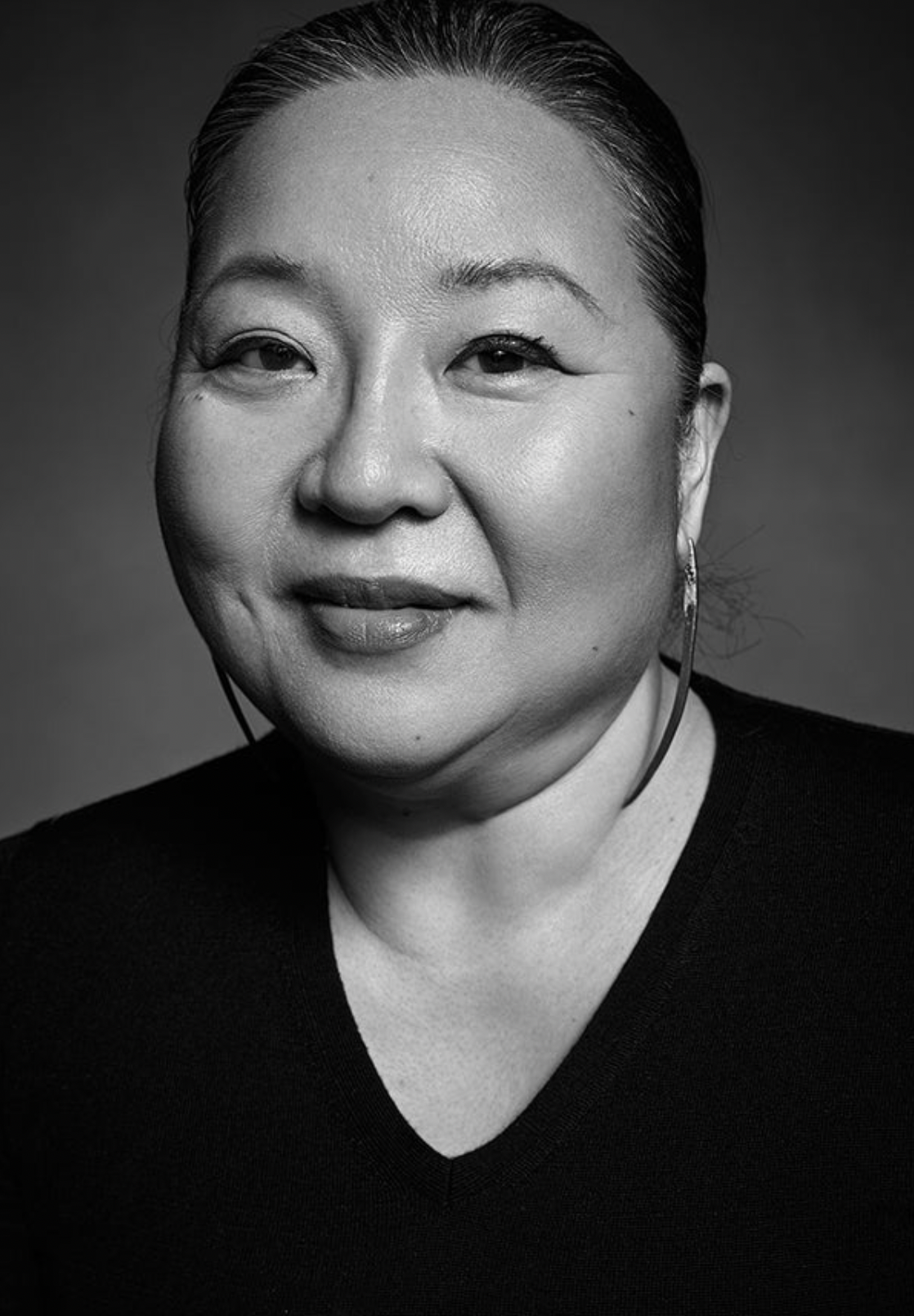
When faced with a global pandemic, some business owners might grudgingly accept the financial fallout, sit back and hope for better days. Not fashion designer Mi Jong Lee.
Armed with energy, vision and a naturally disruptive nature, this WPO member turns challenges into opportunities – keeping her own business sustainable while working to revitalize New York’s garment manufacturing industry.
Mi Jong’s company, Emmelle Design, encompasses two apparel brands, Emmelle and Mi Jong Lee. Having designed and made clothing in New York for over 40 years, she is a strong advocate for reviving local garment production in the Big Apple. This Korean-American entrepreneur’s tireless efforts have earned her the prestigious David Prize for stimulating job creation and economic growth in the city.
Over the decades, Mi Jong’s business has experienced steady, organic growth (it has sometimes been “glacial”, she jokes). However, this slow, deliberate approach has enabled Emmelle Design to survive some tough times, adapt and emerge stronger. Hers is a textbook lesson in business sustainability. And in her eventful business journey to date, she has drawn inspiration and support from networks such as the WPO.
‘Sisterhood of women supporting women’
“When I joined what we call the sisterhood of women supporting women some 15 years ago, it was a revolutionary concept at that time,” she relates. “The thought process that you’re not a woman alone trying to figure things out was a game-changer and a life-changer.”
She has found this “sisterhood” empowering: “In the WPO, members know that they are not alone and don’t have to do this alone. We can rely on other women for honesty and support.”
Mi Jong is not in the business of “fashion” in the typical sense; instead, Emmelle is described as an apparel company focused on garment construction. The emphasis is on longevity and timelessness rather than “hype” or trends, and on preserving the art of garment construction.
In support of this vision and realizing the benefits of vertical integration, she recently launched her website for Emmelle Manufacturing. Keeping the bulk of her supply chain local and leveraging automation and technology, the new division produces apparel for her own in-house clothing brands, as well as offering volume manufacturing services to other brands.
Designing for women who break glass ceilings
Born in South Korea and raised in Mexico, Spain and Costa Rica before moving to the United States with her parents, Mi Jong’s journey has given her a global perspective on business and life. Railing against the medical career her parents had chosen for her, she opted instead to pursue her love of fashion design and garment manufacturing.
In this, she was inspired by her mother, who defied societal norms – moving seamlessly from a construction site to a boardroom to a glamorous cocktail function.
“This is what a modern woman in my mind is, and this is the woman that I wanted to design for… My clients are women who break glass ceilings. They are not Kim Kardashians or movie stars, but they are so amazingly inspirational and powerful.”
Moving to New York with two suitcases and a can-do attitude, Mi Jong opened a small store on Madison Avenue, making clothes in the basement and selling them directly to consumers in the shop above. The business grew at a steady pace, and in 2007 Mi Jong moved into New York’s garment district to expand into the wholesale market.
By 2020, Emmelle Design was operating with three levels of infrastructure: retail, wholesale and manufacturing, with e-commerce on the horizon. The market was already in flux, with fast fashion and expensive heritage brands dominating – leaving little room for Mi Jong’s middle-market offering.
Pivoting during Covid
But when Covid-19 struck and New York became “ground zero”, all three levels of her company were shut down. Her solution? Pivot into manufacturing personal protective gowns for the city and state, to keep the company’s doors open and staff employed.
Here, says Mi Jong, the extraordinary power of the WPO network really came to the fore: “I felt powerless, but I received instrumental support from WPO members to help me pivot.”
She and other small businesses formed the New York City Manufacturers Coalition, with the aim of collaborating rather than competing. Almost a million PPE garments later, scores of jobs were saved and the potential for volume manufacturing and improved workflows became evident.
This experience led Mi Jong to identify a gap in domestic manufacturing that could be addressed by a hybrid business approach, focusing on automation and reducing overproduction and waste from dead stock, among other aspects. Taking a leap of faith, she has expanded into full-floor production, bringing the entire manufacturing cycle in-house, from design concept to finished product.
Her chameleon-like ability to transform her business from a traditional apparel company to a leader in reviving domestic clothing manufacturing has carried her through some tough times. That, and her formidable network of “women supporting women”. She quips that she is most comfortable in the company of “broads” – women who “gut-laugh and make things happen” – of whom the WPO boasts many.
Not afraid to tread her own path, Mi Jong believes that “the best ideas are born out of absolute necessity”. She says, “Opportunity arises when we are at our weakest, when there is a problem.” Wise words from a self-confessed “broad” who makes things happen!